I have been using OpenClaw for several months as a local automation layer for reminders, scheduled jobs, notifications and household workflows.
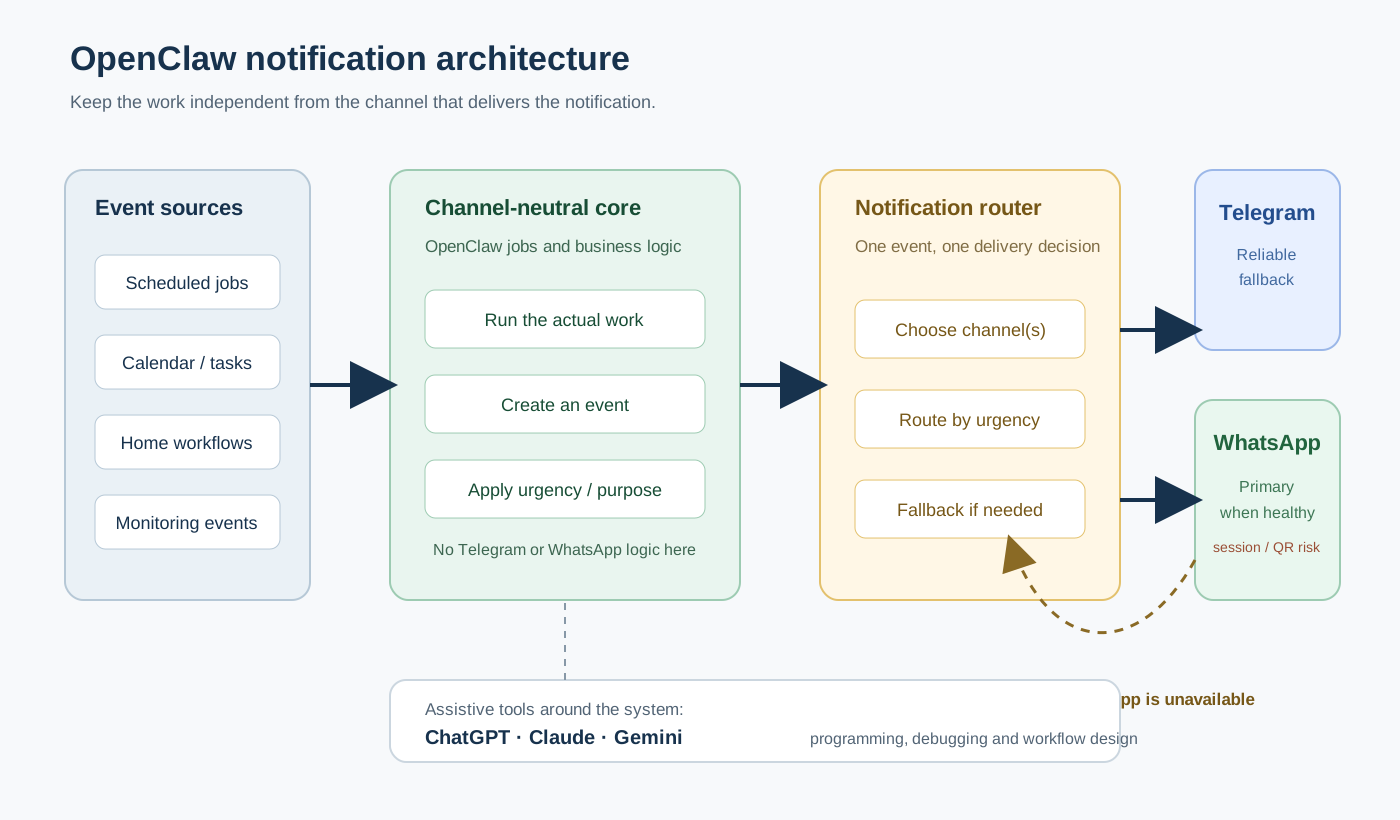
The setup uses a layered notification architecture. The core jobs and business logic remain channel-neutral. A separate notification router decides whether an event should be delivered through Telegram, WhatsApp or both. This keeps the automation layer independent of any one messaging platform.

That separation became especially useful while troubleshooting WhatsApp. After upgrading to OpenClaw 2, I experienced gateway restarts, crashes, unreliable reminders, WhatsApp Web session conflicts, QR relinking issues and problems with self-chat message events. Telegram became a reliable fallback while WhatsApp was being repaired.
The main lesson was simple: notification delivery should remain separate from the middle layer that performs the actual work.
OpenClaw 2 can understand natural-language instructions and turn them into practical actions. I use it to manage scheduled reminders, monitor tasks and calendars, generate email-related alerts, prepare community-call notifications and coordinate recurring household workflows.
Different notifications can also be routed through different channels depending on their urgency and purpose. For example, a lower-priority update may go through one channel, while an important reminder may be sent through both.
OpenClaw 2 is powerful, but it still feels immature in some areas. Gateway restarts can be painful, the service occasionally crashes and requires manual intervention, and reminders can behave inconsistently. WhatsApp may also require relinking and careful session management.
These issues are manageable for a personal technical project, but they make the system less dependable than it should be.
I use Claude, Gemini and ChatGPT extensively for programming and home automation. I recently stopped my Claude subscription and, at least for now, have not really missed it. ChatGPT has become my default engine for much of my work.
Its Work feature has been a breakthrough because it removes friction from tasks that previously required repeated manual intervention. I also enjoy ChatGPT’s voice mode considerably more than the voice experiences I have tried with Gemini and other tools so far.
That may change as these products evolve. For now, ChatGPT remains my preferred tool for programming, automation, voice interaction and day-to-day work, while OpenClaw provides a useful local automation layer around them.